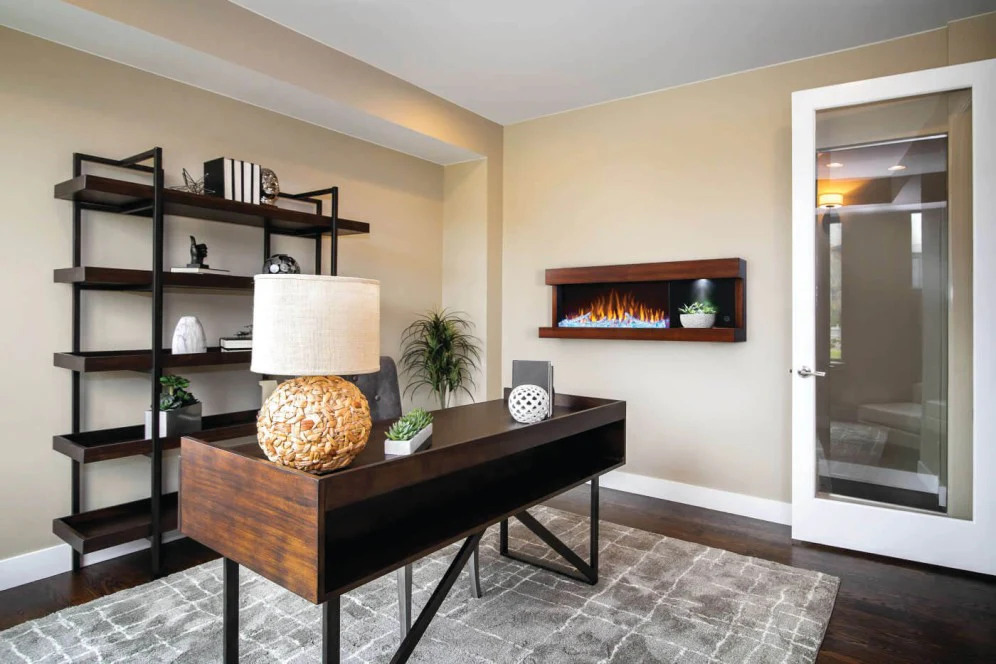
Choosing a fireplace in Ottawa depends on how much heat is needed and how space distributes it. A wrong size leads to overheating or poor efficiency. The process starts by matching output, room volume, and insulation level. Au Centre du Foyer supports this approach by aligning product selection with real heating conditions and layout constraints.
Match fireplace output to actual heating demand
Heating demand comes first. In Ottawa, winter temperatures often drop below -20°C, so output must cover real heat loss. A common reference uses BTU ratings. For example, a well-insulated 1,000 sq. ft. space typically requires 20,000 to 30,000 BTU. However, older homes or open layouts need more. A 1,500 sq. ft. area may require 35,000 to 45,000 BTU depending on ceiling height and air leakage.
Oversizing creates short burn cycles and uneven comfort. Undersizing leads to constant operation without reaching target temperature. Therefore, the fireplace must match calculated demand, not visual preference.
Choose the right fireplace type for the space
The type of fireplace affects both performance and installation. Gas fireplaces offer stable heat and precise control. They suit primary heating zones where consistency matters.
Electric fireplaces work well in smaller rooms or condos. They require no venting, but output remains lower, often under 10,000 BTU.
Wood fireplaces provide strong heat but require storage space and proper ventilation. They also depend on user handling and maintenance.
Details such as fireplace size impact on heating performance become essential, especially when comparing models across different fuel types.
Adapt installation to room layout and constraints
Room configuration directly affects heat distribution. A fireplace placed in a central location spreads heat more evenly. In contrast, a corner installation may create temperature variations.
Ceiling height also plays a role. Higher ceilings increase volume, which reduces heating efficiency unless output compensates for it. Ventilation requirements must also be considered. Gas and wood fireplaces require proper venting systems, while electric models do not.
Thus, installation choices must align with both structural constraints and heating goals.
Avoid common sizing and selection mistakes
Many buyers focus on aesthetics first. However, appearance does not reflect heating capacity. A large unit in a small room causes overheating and discomfort. Another common issue involves ignoring insulation. A well-insulated home retains heat longer, which reduces required output.
In addition, choosing a fireplace without considering usage frequency leads to mismatched expectations. Occasional use requires different specifications than daily heating. These errors often result in higher costs and lower performance over time.
Align product choice with real usage conditions
Au Centre du Foyer offers fireplace solutions adapted to Ottawa’s climate and housing types. The selection process considers output, installation constraints, and usage patterns. This approach ensures that each fireplace matches the space it serves. For example, a compact gas unit may suit a condo, while a higher-output model fits a detached home.
Au Centre du Foyer also helps evaluate heating needs based on real conditions, not assumptions. This reduces the risk of oversizing or inefficient setups.
Move forward with a clear heating plan
Choosing a fireplace requires balancing output, layout, and usage. A structured approach avoids common mistakes and ensures consistent comfort. Au Centre du Foyer provides guidance to match fireplace specifications with actual heating needs.
Contact Au Centre du Foyer to evaluate your space, compare suitable fireplace options, and select a solution that fits your home and Ottawa’s climate.