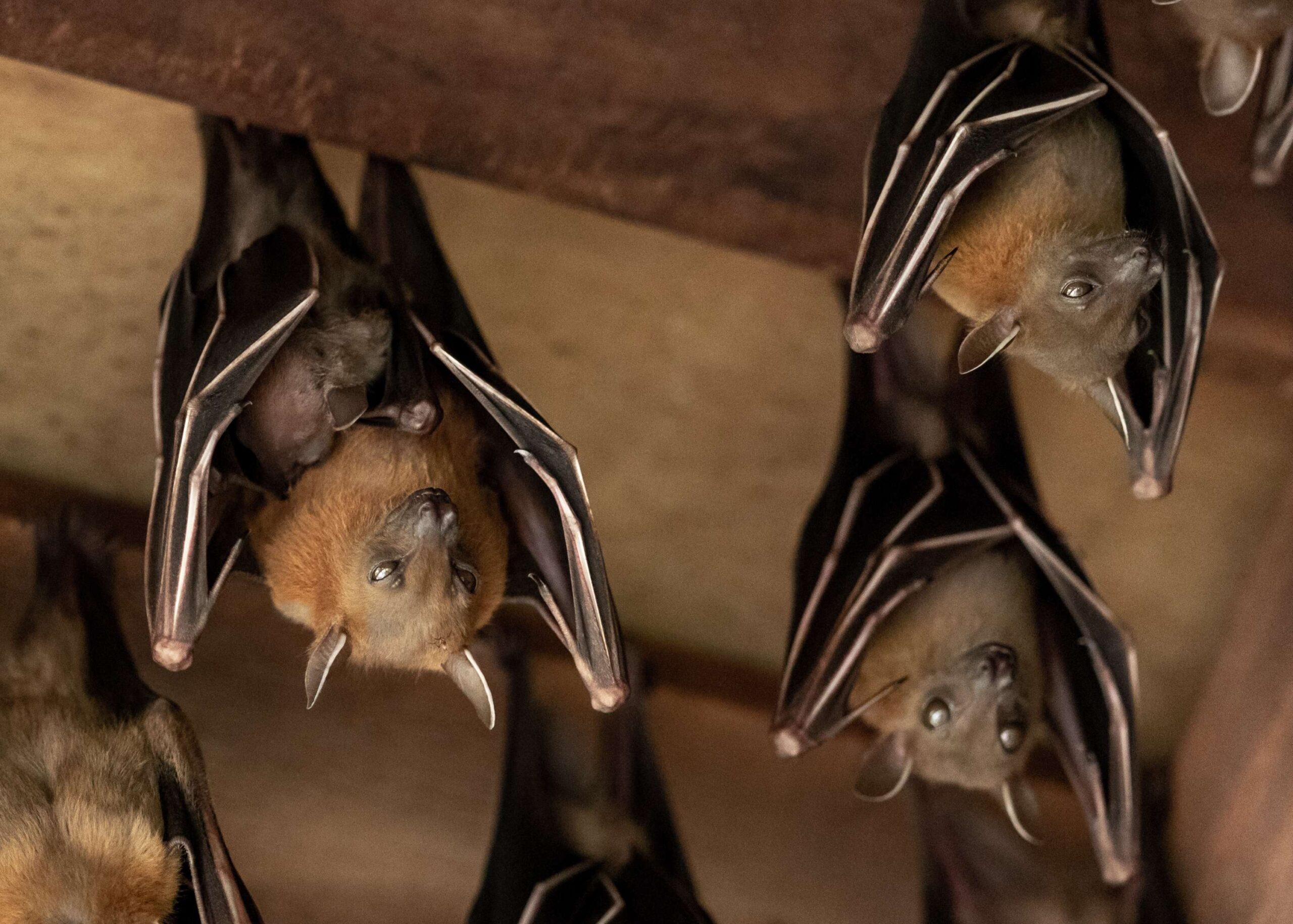
Bat entry points are often small gaps around the roofline rather than obvious holes. Bats can exploit openings roughly ⅜ inch wide, making roof inspections especially important. In Ottawa, weather exposure can gradually create gaps around soffits, flashing, vents, and exterior joints. Finding every active opening matters because sealing only one can leave another route available. Aspen Wildlife Control inspects these vulnerable areas to locate current access points and other gaps that could support future entry.
1. Gaps Along Soffits and Fascia
Soffits and fascia create several vulnerable junctions around a roof. Small gaps can develop where these components meet siding, masonry, or neighbouring roof sections.
Bats can enter behind a loose soffit panel without causing obvious exterior damage. Likewise, deteriorated fascia can expose narrow spaces leading toward the attic.
Look for dark staining, droppings below an opening, or repeated evening activity near one section. These clues can help distinguish active bat entry points from harmless construction gaps.
2. Roof and Attic Vents
Roof vents create intentional openings for airflow, making their surrounding edges worth inspecting carefully. Damaged screening or gaps around the vent base can provide attic access.
Gable vents present another potential route. Their louvers may appear intact while small spaces remain around the frame or screening.
Similarly, ridge vents can develop accessible gaps when components loosen or deteriorate. Therefore, inspecting a roof for bats requires checking both the vent itself and its perimeter.
3. Flashing, Chimneys and Roof Intersections
Roof intersections contain numerous seams that can become entry routes. Flashing around chimneys is one common example.
Dormers, roof valleys, and areas where two building materials meet can also conceal small openings. Bats favour these narrow spaces because they provide sheltered access into structural cavities.
These locations deserve particular attention when homeowners repeatedly see bats emerging from the same roof area. Moreover, locating these secondary openings is essential when trying to get rid of bats without leaving another route available.
4. Roof Edges and Utility Openings
The remaining common locations include gaps beneath roof edges and openings around exterior penetrations. Pipes, cables, exhaust components, and other utility connections can leave small spaces where they cross the building envelope.
A gap does not need to look large enough for a bat. If air or daylight passes through toward the attic, the area deserves closer inspection.
Aspen Wildlife Control checks these less obvious areas alongside soffits, vents, flashing, and other roofline vulnerabilities. A complete inspection helps identify active entry points and secondary gaps that could allow bats to return.
If you notice bat activity around your Ottawa roof, contact Aspen Wildlife Control for an inspection and appropriate exclusion measures.