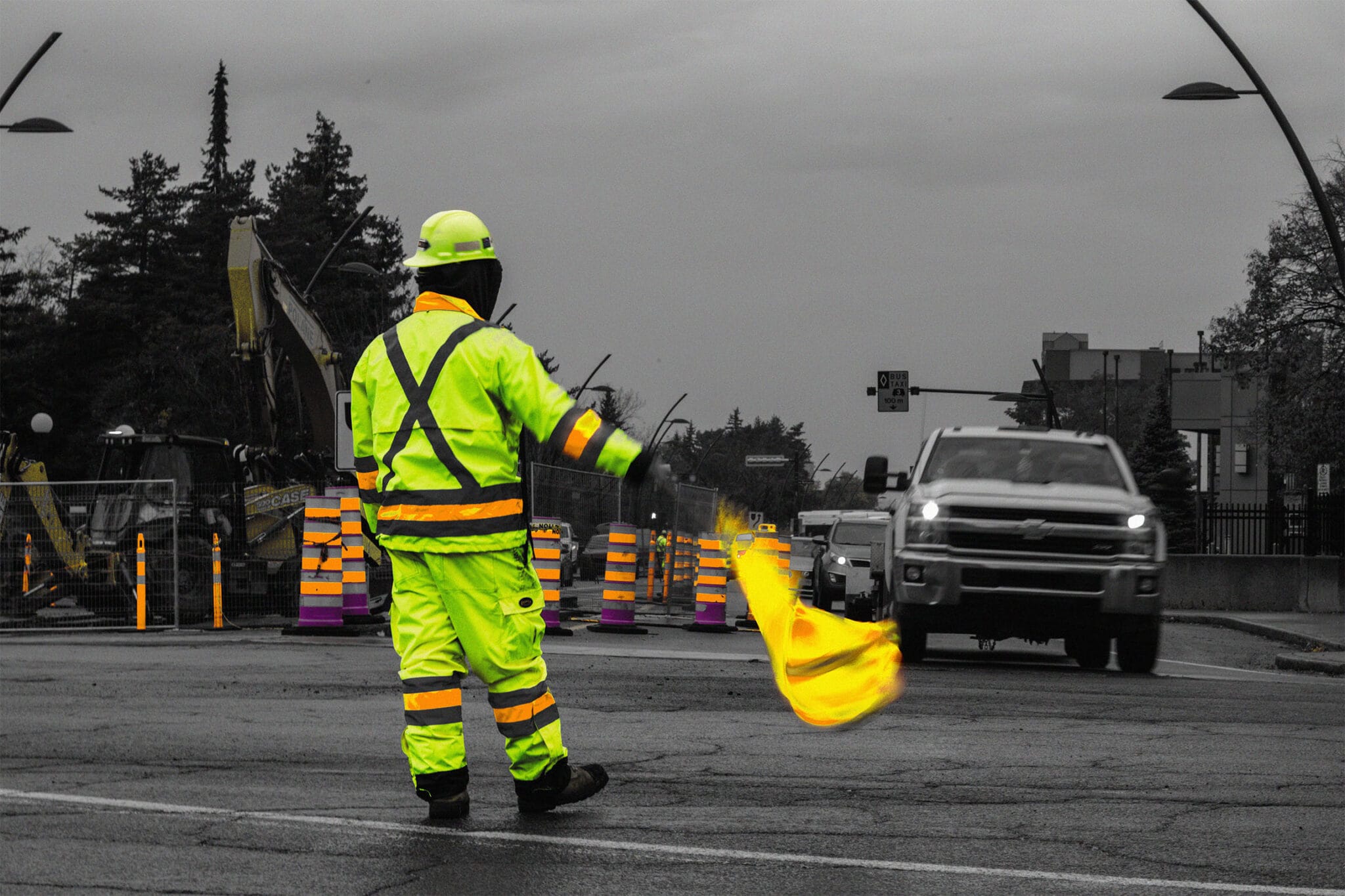
In emergencies, timing is everything. When water lines burst or transformers fail, roads become chaotic in minutes. Traffic management in Ontario must react instantly, with precision. These aren’t just delays—they’re risks. And safety can’t afford confusion.
Balance urgency with structure
Crews must access the site. But people still need to get home, reach work, or avoid danger. Traffic management, even under crisis, must remain organized. Cones, signs, and detours appear in minutes—not hours. Yet they must be placed with care, not panic.
Even more crucial is communication. Lights, barricades, and visible guidance allow both drivers and pedestrians to understand the new flow. The worksite becomes a controlled zone—not a hazard. That’s how order returns, even before repairs begin.
Each minute adds new variables
Unlike planned roadwork, no one knows when or where the next break will occur. A burst main at rush hour in downtown Ontario isn’t the same as a downed wire at midnight in a rural village. Still, both require immediate, intelligent action.
Traffic management must prepare for all scenarios. From icy roads to narrow shoulders or blocked intersections, conditions evolve. Crews must be trained for rapid deployment, but also adapt to changing weather or lighting within minutes. Speed alone isn’t enough—judgment matters more.
Safety extends beyond the worksite
Emergency repairs often unfold alongside live traffic. Visibility matters. If detours are unclear or access points hidden, the risk multiplies. Traffic management takes safety further than cones. It uses flashing lights, mobile message boards, and team coordination to make every danger obvious.
Pedestrian redirection is equally critical. In urban centers, sidewalks may need closure, ramps, or security staff. The objective isn’t just keeping traffic moving—it’s keeping everyone safe, especially in places where calm disappears quickly.
Trusted teams make the difference
During a crisis, cities rely on experience. Not just in how to place signage, but in reading the flow of cars, anticipating driver confusion, and adapting on the fly. Municipalities don’t just need equipment—they need partners who understand the stakes.
That’s why Prosign remains a trusted name in traffic management in Ontario, delivering clarity and control when everything else is uncertain.